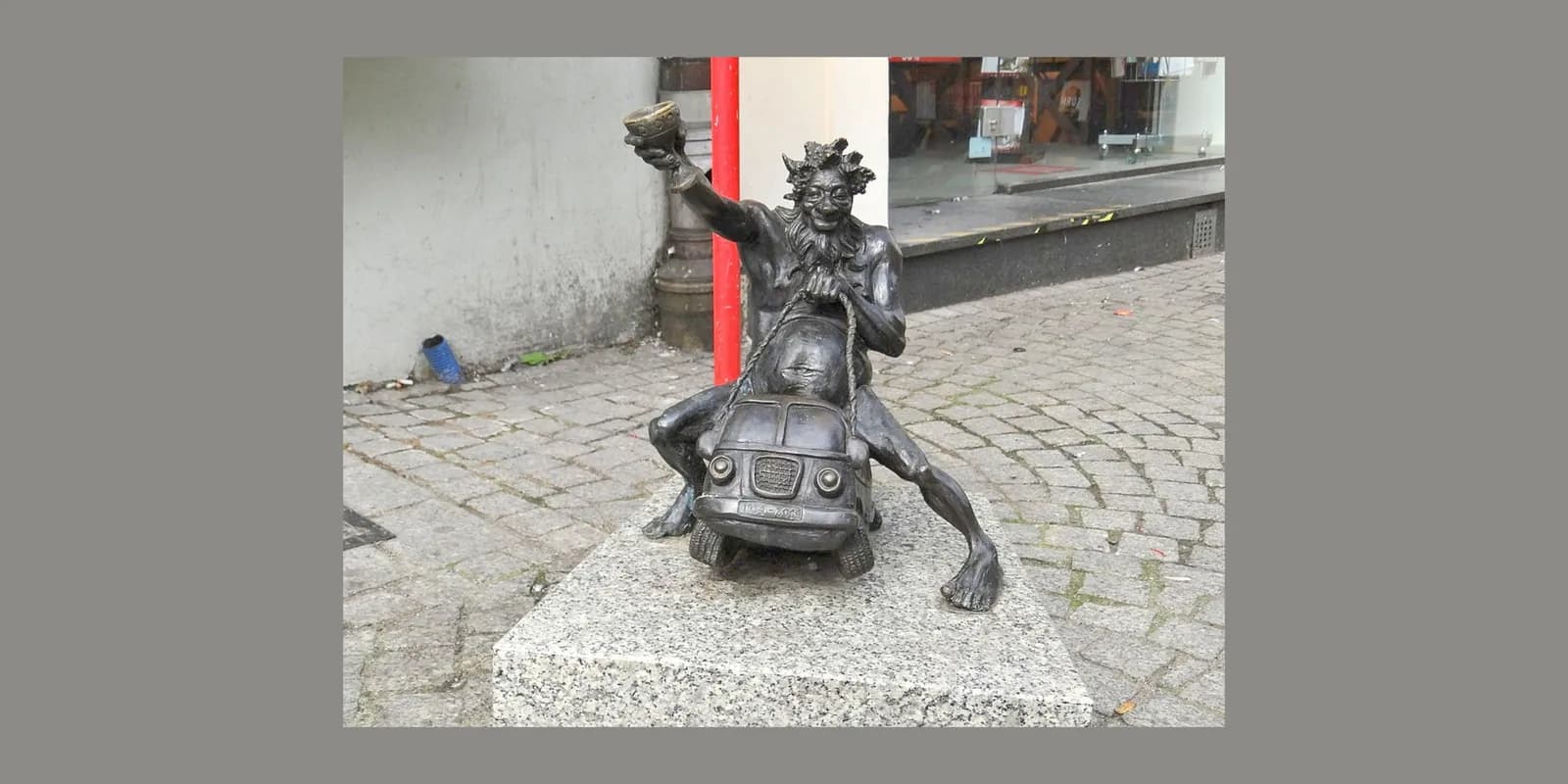
Spend any time exploring Zielona Góra's Old Town and you'll soon notice people looking down as much as they look up. They're not searching for loose cobbles or admiring the architecture. They're hunting for the city's smallest residents, the Bachusiki.
These miniature bronze statues have become one of Zielona Góra's most recognisable attractions, turning a walk through the city centre into an enjoyable treasure hunt. Tucked beside historic buildings, outside schools, near businesses and along quiet streets, each figure has its own name, character and story to tell.
While Wrocław is famous for its dwarfs, Zielona Góra has created something entirely its own. The Bachusiki celebrate the city's centuries-old connection with wine and continue to grow as new statues are added almost every year.
Inspired by the City's Patron of Wine
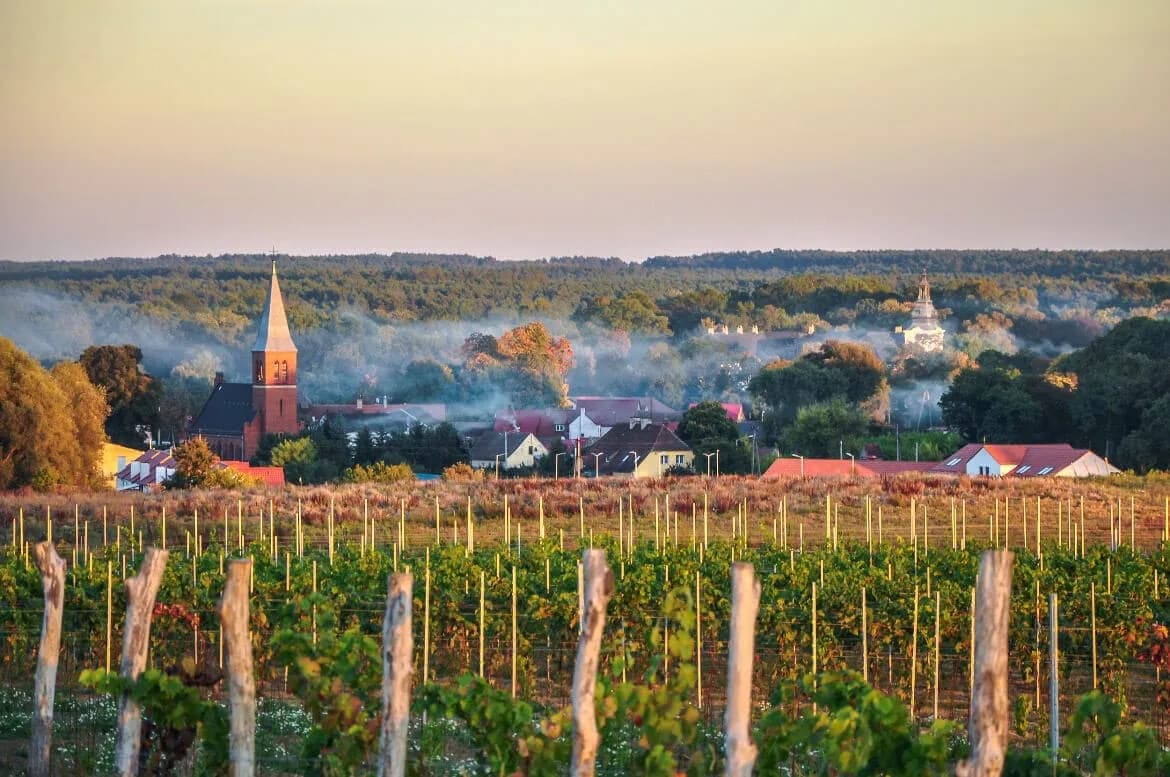
The Bachusiki take their name from Bacchus, the Roman god of wine, who has long been associated with Zielona Góra. According to local legend, vines first flourished here thanks to Bacchus himself, giving rise to one of Europe's northernmost wine-growing regions.
Wine has shaped the city's identity for generations, and that heritage remains at the heart of modern Zielona Góra. Every September, during the famous Winobranie festival, Bacchus symbolically receives the keys to the city as thousands of visitors arrive to celebrate its wine-making traditions.
The Bachusiki keep that story alive throughout the rest of the year, bringing a touch of humour and local history to streets that residents pass every day.
Small Statues With Big Personalities
The idea began after the Monument to Bacchus was unveiled in 2010. Before long, smaller companions started appearing across the city, each sponsored by a local organisation, school, institution or business.
Rather than producing identical figures, every Bachusik was given its own identity.
One of the best-known is Beczkus, whose name comes from the Polish word beczka (barrel), making him a fitting ambassador for the city's wine traditions. Nearby, you may come across Elektronikus, representing the energy sector, Aldemedus, linked with healthcare, or Edwardus, unveiled outside a high school in 2026 and carrying books and chemistry flasks in recognition of the school's academic heritage.
Others celebrate tourism, education, sport, local businesses and community organisations, with names such as Questina, Clubikus and BiegUZka reflecting the people and institutions they represent.
With more than 80 officially recognised Bachusiki spread across the city, no two are exactly alike.
A Trail That Keeps Growing
Unlike many public art projects, the Bachusiki are not a finished collection.
New statues continue to appear as organisations commission their own character, adding another chapter to Zielona Góra's evolving story. Each unveiling is marked by a local ceremony, reinforcing the connection between the sculpture and the community behind it.
For returning visitors, this means there is always something new to discover.
Exploring Zielona Góra One Statue at a Time
Part of the appeal is that there is no single way to experience the Bachusiki.
Some visitors follow the official trail map from the Tourist Information Centre, while others simply wander through the Old Town and see how many they can spot along the way. Looking closely is all part of the fun. A tiny bronze figure might be sitting on a wall, peering around a doorway or waiting quietly beside a bench.
The statues also encourage visitors to explore streets and squares they might otherwise overlook, making the hunt as rewarding as the destination itself.
A Symbol That Belongs to Zielona Góra
The Bachusiki have become far more than a collection of bronze sculptures. They capture the city's personality in miniature, celebrating its wine heritage while recognising the schools, charities, businesses and organisations that continue to shape modern Zielona Góra.
Whether you're searching for your first Bachusik or adding another name to your growing list, each discovery reveals another small piece of the city's story, proving that some of Zielona Góra's biggest attractions are also its smallest.
image credit: Gorofil, CC BY-SA 4.0